
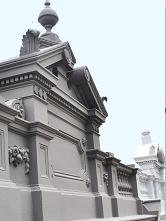
I once walked through a crumbling Victorian terrace in Carlton.
Ceiling roses hanging on by a thread.
A façade worn by 120 Melbourne winters.
Floorboards that creaked like they were negotiating retirement.
Most buyers saw risk.
I saw leverage.
Because in Melbourne, the oldest homes often sit on the strongest foundations — financially, culturally and structurally.
And the data backs that up.
Melbourne’s Property Market Rewards Character
CoreLogic data consistently shows established inner-Melbourne suburbs outperform outer growth corridors in long-term capital growth. Land scarcity and architectural character drive sustained demand.
Domain’s Property Price Reports repeatedly show suburbs such as Fitzroy, Carlton, East Melbourne and Albert Park — all rich in Victorian and Edwardian homes — achieving median house prices significantly above the metropolitan average.
That’s not nostalgia.
That’s constrained supply meeting persistent demand.
As the Heritage Council of Victoria states, heritage places are valued because they “tell the story of Victoria’s development and contribute to community identity.” Identity carries economic weight.
For a deeper breakdown of how this translates into real property performance, the analysis behind the data behind Melbourne’s highest-value historic properties explains why older buildings continue to command premiums over newer stock.
Scarcity Is the Real Asset
You can build more townhouses.
You cannot build more 1890s terraces.
According to the City of Melbourne, thousands of properties sit within Heritage Overlay controls designed to protect streetscapes and architectural integrity. These overlays restrict demolition and inappropriate alterations.
Scarcity isn’t accidental.
It’s legislated.
Research from the Australian Housing and Urban Research Institute indicates that heritage listing in established markets does not suppress property value and can support long-term stability by maintaining neighbourhood character.
When supply is fixed and demand is emotional, value holds.
Restoration vs Renovation: Very Different Economics
A cosmetic renovation adds surface appeal.
A heritage restoration protects structural integrity and long-term asset performance.
The Green Building Council of Australia highlights that retaining and upgrading existing structures can significantly reduce lifecycle carbon emissions compared to demolition and rebuild projects.
The Productivity Commission has also acknowledged the economic importance of maintaining established housing stock within growing cities.
Restoration isn’t sentimental.
It’s economically rational and environmentally aligned.
Buyer Psychology: Why Character Commands a Premium
The Real Estate Institute of Victoria frequently observes that character homes in tightly held suburbs attract stronger competition because buyers perceive them as irreplaceable.
Irreplaceable drives urgency.
Urgency drives price.
A new townhouse competes with dozens like it.
A restored Federation home competes with almost none.
That difference shows up at auction.
The Long Game Wins
Restoration isn’t about chasing trends.
It’s about protecting structural scarcity.
It’s about recognising that Melbourne’s architectural legacy is a financial moat.
New buildings depreciate from day one.
Older buildings — when preserved properly — appreciate over decades.
So the better question isn’t “How much will restoration cost?”
It’s “What will this property be worth in 20 years if it’s done right?”
That shift in thinking is where investment begins.
