
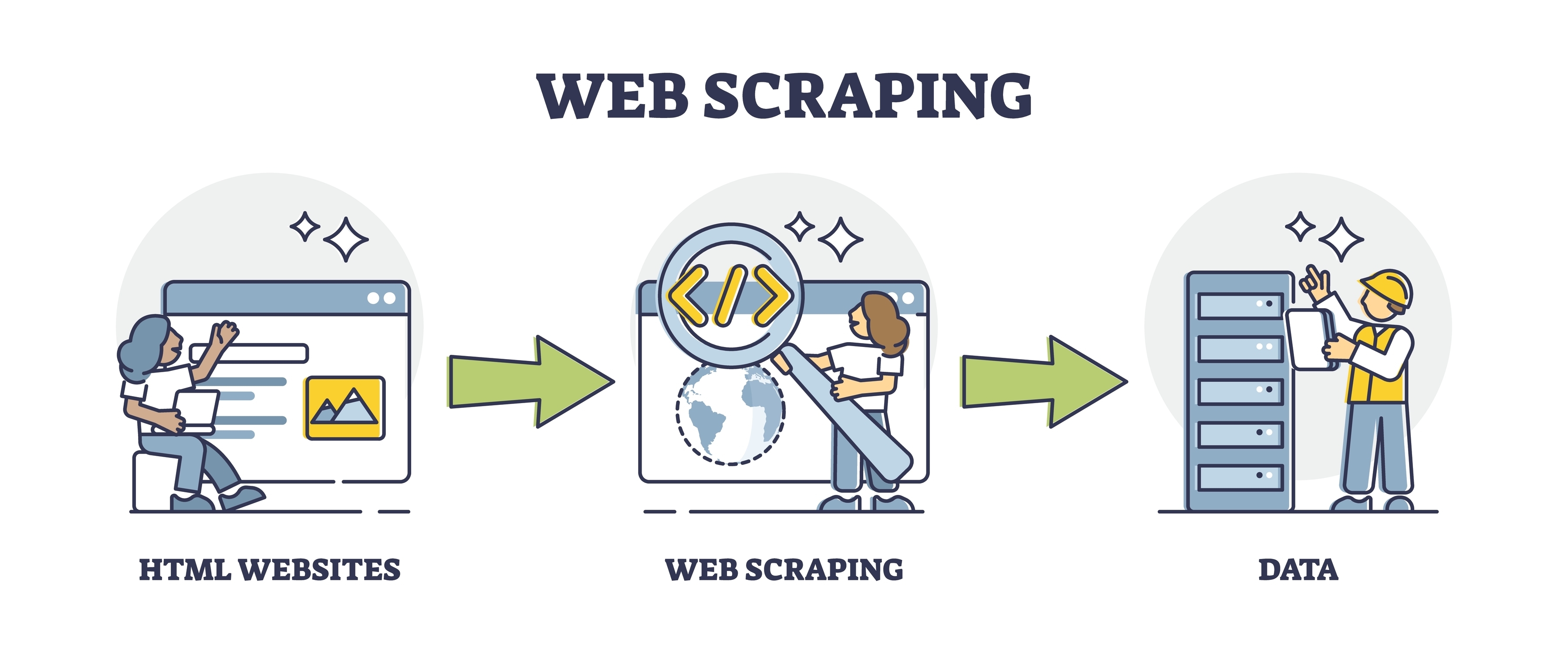
In the modern digital landscape, the need for real-time data has never been more crucial. From e-commerce businesses monitoring competitors’ prices to financial analysts tracking stock market fluctuations, the ability to access up-to-date information quickly and accurately can significantly impact decision-making processes. Traditional methods AI Powered Web Scraping of web scraping, though useful, often struggle with the demands of real-time data collection, particularly when dealing with dynamic content, frequent website updates, or complex page structures. Enter AI-powered web scraping: a transformative solution that offers enhanced speed, adaptability, and efficiency in collecting real-time data. By harnessing the power of artificial intelligence, businesses can now access data in near real-time, providing a competitive edge that was previously unattainable with traditional scraping methods.
One of the primary advantages of AI in web scraping is its ability to adapt to dynamic, constantly changing web pages. Traditional scraping methods are typically rule-based, meaning they rely on fixed patterns and structures. This often leads to failures or inaccuracies when websites update their layouts, add new content, or use complex JavaScript-driven interactions. AI-powered web scraping tools, however, use machine learning algorithms that allow them to learn from a website’s layout and adjust automatically as the site changes. By continuously analyzing the site’s behavior, AI tools can detect alterations in structure or content and adapt in real-time, ensuring that data extraction remains accurate and efficient. This level of flexibility is crucial for industries that depend on up-to-the-minute data, such as e-commerce, news aggregation, and financial markets.
The integration of AI with web scraping also enables businesses to collect data at a far greater scale and speed than traditional methods. AI-driven web scraping tools can automate the collection of data from thousands of websites simultaneously, extracting relevant information without human intervention. This capability is especially useful when dealing with large datasets or when businesses need to track data from multiple sources in real-time. For example, a marketing team may use AI to scrape social media platforms for brand mentions, product feedback, and emerging trends, enabling them to react promptly to shifts in customer sentiment. Financial analysts can track stock prices, news articles, and market developments across multiple platforms, obtaining critical insights that allow them to make faster, more informed investment decisions.
Another key feature of AI-powered web scraping is its ability to process and analyze unstructured data. Much of the valuable information available on the web exists in unstructured formats—such as text, images, and videos—making it challenging to extract and utilize effectively. Traditional scraping tools often struggle with this, extracting data in raw, unorganized formats. AI, however, is equipped with advanced capabilities like natural language processing (NLP) and image recognition, enabling it to interpret and extract valuable insights from unstructured data. For instance, AI can analyze news articles for sentiment, classify images or videos to identify products, or extract meaningful patterns from social media posts. This ability to convert unstructured data into structured, actionable insights is a game-changer for businesses that rely on diverse data sources.
Despite the many benefits, there are challenges that must be addressed when integrating AI into web scraping for real-time data access. One of the primary concerns is ensuring that AI-driven scraping tools comply with data privacy regulations, such as the General Data Protection Regulation (GDPR). Since AI can scrape vast amounts of data, there is a risk of inadvertently collecting sensitive or personal information, leading to potential privacy violations. Ethical considerations also come into play, as businesses must ensure that their data collection practices respect the terms of service of the websites they scrape. Therefore, it is essential for organizations to implement robust measures to ensure transparency, legality, and compliance with ethical standards when using AI-powered scraping tools.
In conclusion, AI-powered web scraping is revolutionizing the way businesses access and use real-time data. By offering unparalleled flexibility, scalability, and speed, AI-driven tools can adapt to dynamic websites and collect data from a wide range of sources in near real-time. This has major implications for industries that rely on up-to-date information for competitive advantage, such as e-commerce, finance, and marketing. The ability of AI to process unstructured data further enhances the value of web scraping, providing businesses with deeper insights and actionable intelligence. As AI technology continues to evolve, its role in web scraping will become even more essential, offering the promise of faster, smarter, and more efficient data access. However, businesses must remain vigilant about privacy and ethical concerns to ensure that AI-powered web scraping continues to be a responsible and beneficial tool for real-time data collection.
