
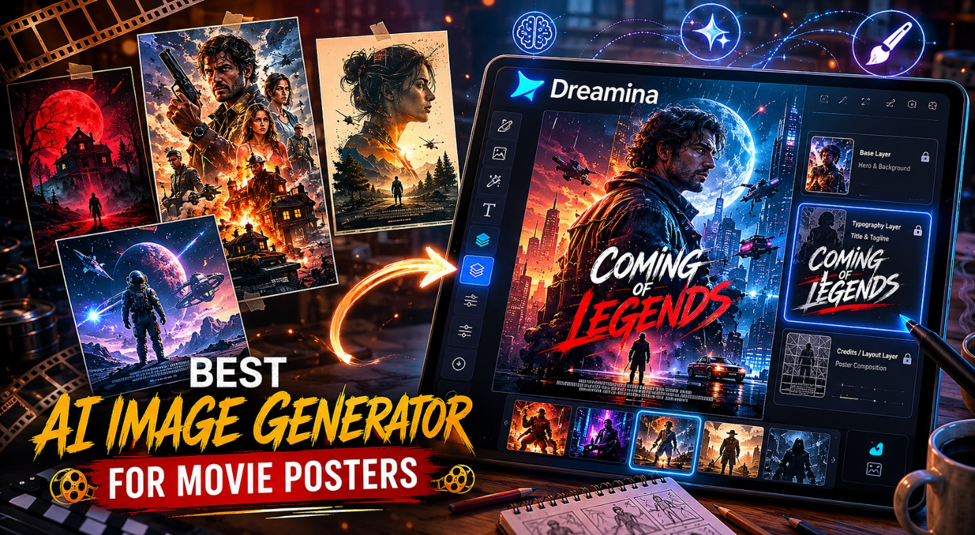
Independent filmmakers and marketing teams working with limited design budgets frequently look for the best ai image generator movie posters tools can deliver, since poster design traditionally requires both strong illustration skills and an understanding of promotional composition. A great movie poster needs to communicate genre, tone, and intrigue in a single glance, which is a surprisingly demanding creative challenge.
What Makes a Poster Work
Composition hierarchy is critical. The viewer’s eye needs to move naturally from the title, to the central image, to supporting details like cast names or taglines. Generators that understand this layered structure produce far more usable results than those that simply render a striking image without poster-appropriate composition.
Genre signaling through visual language matters enormously too. A horror poster relies on different lighting, color, and compositional cues than a romantic comedy or an action thriller, and the strongest generators can shift their entire visual approach based on genre descriptors in the prompt.
Comparing Tools for Poster Design
Look for generators that handle dramatic, high-contrast lighting well, since posters rely on bold visual impact rather than subtle, naturalistic lighting. Check whether the tool supports leaving negative space for text overlays, since many posters need clean areas reserved for title and credit text added in post-production.
Real-World Applications
Independent filmmakers use AI-generated poster concepts to test different visual directions before commissioning final artwork. Marketing teams prototype multiple poster variations quickly to A/B test audience response. Film students and hobbyist creators use these tools to practice poster design concepts without needing advanced illustration skills. Testing a platform such as Dreamina with your film’s actual premise and genre is the best way to judge whether it captures the right tone.
Tips for Better Poster Generations
Specify the genre explicitly and reference tonal cues, like “tense psychological thriller poster with a single isolated figure” rather than vague descriptions. Leave room in your prompt description for negative space if you plan to add text afterward, since cluttered compositions leave no room for title placement.
FAQ
Can AI-generated movie posters be used for actual film marketing? Many independent productions use AI-assisted poster concepts for early marketing tests, though final release posters often involve professional design refinement.
How do I get a generator to leave space for text? Describe your desired composition explicitly, mentioning that you want open space in specific areas like the top or bottom third of the image.
Do these tools understand different film genres visually? Many generators respond well to genre-specific descriptors, shifting lighting and color choices accordingly when the genre is stated clearly.
Is poster design a good use case for AI image generators? Yes, it’s one of the more practical commercial applications, especially for independent productions without large marketing budgets.
